My December listens

Don’t Forget Me, Little Bessie, James Lee Burke
For many years, I looked forward to James Lee Burke’s latest book being published towards the end of the year. His blend of rich, evocative backgrounds, deeply flawed yet inherently decent main characters and the subtle inter-weaving of supernatural elements meant I was in for a great story that would give me many hours of mentally poking through the plot strands long after I had closed the cover. Then, a couple of years ago, I began to fall out of love with his writing. The characters seemed to lose their vibrance, taking second place to long, preachy tirades that seemed to be the author’s personal feelings and which ripped me rudely out of the story. But … along came Don’t Forget Me, Little Bessie and, as soon as I saw the title I just knew that Burke had come roaring back. You can read the blurb for yourself, you don’t need me to re-gurgitate it, all I will say is that if you like a great yarn, told unflinchingly in a vivid, visceral style, then you will love Bessie’s story. Better still, listen to it, told in Amanda Stribling‘s sardonic Texas drawl.

Christmas is Murder, Val McDermid
I read this collection of short stories by the Scottish queen of crime a few years ago and, as I am now largely constrained to audiobooks, thought it would be a welcome diversion to dip in and out of during what proved to be a fraught run-up to Christmas. Not all the stories are about Christmas and a couple of them don’t quite hit the mark but, to balance this, there are a few belters where McDermid takes the brakes off and shocks the reader rigid (or, in my case, listener). There’s a mixed bunch of narrators, including the author herself, which keeps things lively. All in all, a satisfactory read and I’ll keep it for next year.

The Widow, John Grisham
After the high of James Lee Burke and the fairly solid satisfaction of Val McDermid, I was looking forward to a John Grisham. After all, he’s arguably the first, great legal thriller writer. A Time to Kill, anyone? This was dull. Turgid. Simon Latch, a struggling, small town lawyer, gets greedy when a rich widow walks Into his office and asks him to prepare her will. Long story short – he succumbs to greed, manipulates her into signing a will that will make him a rich man, she dies and he gets charged with her murder. Normally, that would take up the first third of the book and then we’d have court room drama, lawyers with the ability to pull rabbits out of hats, last minute witnesses and a last minute acquittal. Instead Simon thinks a lot, talks a lot, takes the widow for interminable lunches, minutely described. It drags on and on until, eventually, he’s acquitted by a deus ex machina and talks some more, thinks a bit and goes home to his kids. All I can say about Michael Beck, the narrator, is that his voice fitted the story.

I also read
Through the Devil’s Door, Carrie O’Leary.
I discovered this author through one of my Facebook groups and was interested enough to read it at 30 point on my MacBook as there is no audio version available. It’s a collection of short stories in the horror/fantasy genre. They’re well written, believable in a slightly spooky way and I learnt a new fact about side doors in churches. O’Leary also has a book of flash fiction which is right up my street as I can read one of the stories over a cup of tea with no real strain on my eyes.

The ones who came and went …
The Good Liar, Denise Mina
The Midnight King, Tariq Ashkanani
After seeing an article about Ian Rankin being shortlisted for the 2025 McIlvanney Prize  (Scottish Crime Book of the Year), I resolved to download some of the other nominated books by authors I have not yet read. Unfortunately, the two I chose became DNFs for very different reasons.
The Good Liar is a solid, well-written book by a respected author. For me, though, it was a bit on the pedestrian side, moving slowly and carefully forward with no highlights to pique my interest so I stopped listening after a few chapters. It may be that I will enjoy this book at a later date when I am in a different frame of mind so I will keep it in my library until such a time may arrive.
On the other hand, I found The Midnight King just too hard to take. I deleted the book as soon as its central theme of child kidnap, abuse and murder, perpetrated by adults as well as other children, became apparent. I was later astounded to learn that The Midnight King was the overall winner and is now considered to be the best Scottish crime novel of 2025. Obviously, the judges have much stronger stomachs than mine.


Christmas Drinks

One minute past midnight.
Christmas Day.
Barry nudges his wife. “You ready, Cheryl?”
No answer. Snoring gently, Cheryl is fast asleep.
“Oh well,” says Barry. “Looks like it’s up to me. As usual.”
Reluctantly, he gets out of the warm bed, pulls on his dressing gown and makes his way downstairs. In the living room, he retrieves the gaily wrapped Christmas parcels from a high cupboard. He and Cheryl haven’t gone mad this year. Their three-year-old twins, Petal and Peter, have only a hazy idea of what Christmas is all about, anyway, and things have been tight since Barry lost his job.
The Christmas tree twinkles brightly, their one bit of extra expense as the twins love to watch the lights flash on and off. He arranges the parcels, smiling as he envisages the twins’ faces as their little fingers rip the wrapping paper off the carefully selected toys..

In the kitchen, he fills a glass with milk, places a mince pie on a plate and finds a carrot in the vegetable rack for Rudolph. He doesn’t see the sense of doing this, as the twins are so small, but Cheryl is insistent that they begin building traditions immediately.
“We don’t even have a chimney,” he mutters to himself as he looks around the living room searching for a place to leave Santa his goodies. He settles on a small table and then, yawning, hugely, he turns to retrace the steps upstairs.
“Nice tree,” says a voice behind him – a deep voice that rumbles gently through the room – and he freezes.
A few seconds pass with no sound and he tells himself, “Overtired, or else those pickled onions.”
He reaches for the door knob and the voice says, “Could do with a few more lights, though.”
Slowly, very slowly, Barry turns … and looks up into the face of – no, he definitely is overtired. He is not looking at Santa Claus. This is not happening. He closes his eyes tightly, waits a few seconds and opens them again. Santa Claus is still there, resplendent in red velvet, white fur and a hat with a bell that jingles softly.
“You’re not here.” Barry speaks firmly. Whatever is happening, he’s not having it. “It was the pickled onions, that’s all. You do not exist.”
Santa Claus smiles, just a smile, not the hearty chuckle one would expect from the spirit of Christmas, and sits down on the sofa, its springs protesting beneath his considerable weight. “That’s better,” he says. “It’s been non-stop for nine months. I don’t suppose you’ve got a drink?”
“A drink?” stutters Barry. “Er, yes, a glass of milk? Mince pie?”
“God, no. I’m lactose intolerant. Everybody leaves milk and I have to drink it. The rules, you know. And don’t even get me started on how Rudolph suffers after eating all those carrots.”
“A beer?” suggests Barry.
“As long as it’s not that alcohol free rubbish.”
Two minutes later, Barry finds himself sitting beside his strange guest, each with a freshly opened beer.
“I see you’ve gone easy on the presents this year,” Santa observes. “I wish everybody would do the same. My job would be a lot easier.”
“Well, yes, er –” Barry flounders. “What am I supposed to call you?”
“Nigel, Nige, for short if you like.”
“Nigel. Right.” Barry wonders briefly if he’s lost his mind, sitting here talking to a figment of his own imagination, but he can taste the cold beer and his toes are growing cold as the room slowly cools. He gulps his beer and continues, “As it happens, I got laid off a couple of months ago so…” His voice tails off.
“I wish I’d known.” Nigel chucks his empty beer can on the floor and waits while Barry fetches him another one. “I could’ve done with a bit of extra help this year. This new wage increase means I had to lay off a couple of elves. I’d have paid you in toys and maybe a little something for Cheryl.”
“Yeah, the budget was a stinker this year,” says Barry, finishing his  own beer and exploding into laughter, bubbles shooting down his nose. This is not happening. He’s not sitting here discussing economics with Santa Claus, or Nigel, or whoever he is.
“I don’t suppose you’ve got a cigarette?” Nigel asks hopefully.
“No, Cheryl made me give them up, said it was bad for my health.”
“Tell me about it. I’ve not had a ciggy since 1894.”
Nige looks at a sparkly watch, pinned to his red coat. “Go on, just one more, and then I’d better get off. I should have been over the Isle of Man by now.”
As they sink their final beers, Nigel belches and the Christmas tree shivers in the shockwaves. 
Barry glances at the mince pie, gets to his feet and walks to the table. “You’d better have something to eat,” he says. “Soak up the beer.” He picks up the plate but, when he turns back, Nigel is gone, leaving only an indentation of gigantic proportions on the sofa cushion.
“Nigel?” Barry rubs his eyes and looks round the empty room before laughing self consciously. “What a weird dream,” he mutters, turning off the Christmas tree lights and making his way back to bed.
Christmas morning is bright and clear. Cheryl and Barry creep downstairs for a quick coffee before the twins wake up.
“What’s this?” Cheryl calls from the living room. 
Barry joins her and stares down at the litter of beer cans surrounding the sofa.
“I, uh …” A smile spreads over his face, broad enough to make his jaw ache. “Sorry, love. My mate, Nigel, came round for a few bevvies after you went to bed. I’ll clear it up.”
“See you do.” As she leaves the room, Cheryl turns on the Christmas tree lights and Barry breathes in sharply.
“Thanks, Nige,” he says as the increased number of lights blaze across the room. “Merry Christmas.”


At the Movies

Wednesday is movie day at our house. Beverley arrives mid-morning and, after lunch we settle down to watch a film, chosen by one of us in strict rotation. This means that we have all been exposed to films we wouldn’t normally have chosen to watch, with some surprising results. Apart from Gone With the Wind, which is a given, we have yet to happen upon the film that will earn five stars from all three of us.

In November, I listened to …

Geneva, Richard Armitage
I was attracted to this book by the prospect of listening to the two main narrators, Nicola Walker and Richard Armitage himself and I wasn’t disappointed in their delivery. The plot sounded a bit James Bond-ish, well out of my wheelhouse, but I’m always open to a new experience, so I paid my £7.99 and dived in. It’s a fairly turgid tale with loosely drawn, stereotypical characters. It’s not difficult to pin down the goodies and the baddies early on and the ending is predictable. Much as I admire Armitage as an actor, his prose is overly dramatic, excitable in places and the dialogue sedentary. I stuck with it to the end, though. As noted, the narration was excellent and the voices were a not-unpleasant accompaniment as I dashed away with the smoothing iron or wielded a duster. A bit like the old days, sitting through a B movie while waiting for the main event.

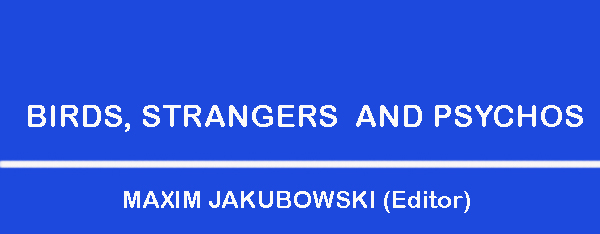
Birds, Strangers and Psychos, Maxim Jakubowski (editor)
An anthology of short stories in the style of and paying homage to Alfred Hitchcock, each one written by a well-known name in the mystery/thriller genre – Lee Childs, M W Craven, Denise Mina, Sophie Hannah and S A Cosby to name but a few. It’s an interesting and entertaining book, featuring inventive variations on Rope, Strangers on a Train, Vertigo and The Birds etc. Some stories work better than others, a couple tried too hard and fizzled and burned, and there were a few outstanding ones that really hit the mark. It’s the kind of book where you need to read a couple of stories, walk away from it for a while and then go back with a cleansed palate, otherwise the high incidence of blondes with bright red lipstick will begin to grate as will the wise-cracking asides. M W Craven’s story will please constant readers as it fits in chronologically with the Poe and Tilly books.

Shadow at the Door (David Raker 12), Tim Weaver
This one’s a bit odd. I’m a fan of Tim Weaver’s character, David Raker, who ‘finds people’ for a living. Here, we’re presented with four shorter stories dealing with cases that are linked. And they are, but only vaguely. The first case is typical Raker, as he steadily plods along, piecing together the information that will lead (normally) to a satisfactory conclusion. The second case is much shorter, Raker doesn’t appear in it at all and there’s no conclusion. It gets mentioned a few times after that and I can only assume Weaver is setting up a future book. Case three is messy and, again, Raker only appears briefly as a voice on the end of a telephone line. Finally case four is set in America where Raker has gone to visit a friend and, yet again – you’ve guessed it – he is peripheral to the action. Weaver’s writing is excellent, as usual, but I missed the complicated, intricate teasing out of a full-length novel.

Christmas all wrapped up

Book One: Ashes on the Tongue
In 1950s Northern Ireland, two families are connected by a history steeped in secrecy, violence and betrayal. Ruby and Victor Crozier are Protestants, with one daughter, Fen, still at home. When Victor forces Fen out of school and into work in a linen mill, she begins to learn about the darkness in her family’s history. 
Rose and Dermot Quinn are Roman Catholics and parents of fifteen children. Their eldest son, John Joe, has just come home from England where he works and sends home much needed money.
When Fen and John Joe unwittingly witness an atrocity, they are drawn into a web of danger emanating not only from within their own homes but also from the violent campaign for a unified Ireland. In fear of reprisals, they each make decisions which will have far-reaching consequences and change their young lives forever.

Book Two: The Stain o Silence
Set in 1950s Northern Ireland, The Stain of Silence continues the story of Fen Crozier, which began in Ashes on the Tongue.
After fleeing from the wrath of her Protestant father and the B Special Chief Constable, Fen Crozier finds sanctuary in the clergy house of St. Barnabas’ Roman Catholic Church. Sickened by the bigotry she has left behind, she is drawn to the ideal of a united Ireland only to realise she lacks commitment to the cause.
When she inadvertently places herself in danger from ruthless IRA sympathisers, she once again runs from the violence that seems to follow her. Caught between the two factions and with no one to turn to, Fen is forced to take charge of her own destiny.
Struggling to find her place in life, she becomes more deeply embroiled into the sectarian struggle and makes a terrible decision which could destroy her and her family.
In fear of her life and with her world in pieces around her, can Fen survive to find the peaceful life she has always craved?

Book Three: Burden of Freedom
Fen Crozier is living in Belfast, homeless and a fugitive from justice. On the last day of 1957, her father, Victor, is hanged for the murders of a Catholic priest and an Orangewoman. Fen herself is not completely free from guilt in the murderous rampage that tore her life apart in the last year. 
She risks arrest by visiting the Crumlin Road Gaol on the morning of Victor’s hanging. There, she is approached by Geordie Maguire, who claims to be her half brother and tells her she also has a grandfather, Alfred Crozier.
Drawn into the troubled dynamics of this new branch of her family, Fen agrees to return to Greycastle at the behest of Alfred. There, she is forced to flee from the hostility and threats of her one-time neighbours, exposing her to danger from both the RUC and old enemies from the IRA.
Not knowing who to trust and growing ever more isolated, Fen must find enough inner strength to escape a situation that threatens not only her fragile state of mind but her very life. 


The latest book in the Hartford Manor series

I began reading the Hartford Manor books with Betsy, which is actually the prequel to the series. It was, in some senses, a harrowing story of a hard and difficult childhood, set against a background of the Devon countryside in the 1800s. In that book, Marcia Clayton brought to life a host of characters, with their own dreams, fears and domestic dramas, all of whom have grown organically in the ensuing books. 
In Annie’s Secret, two shocking incidents from the past come together to threaten the hitherto happy marriage of Annie and Robert Fellwood. I will not detail these incidents as it may spoil these wonderful stories for new readers. Suffice to say, Annie is beset by doubts and resentment as Robert, engrossed with his own secrets and torn by divided loyalties, fails to support her. It’s an expertly teased out story, enhanced by the hustle and bustle of life surrounding the main characters. If you have not yet discovered the Hartford Manor series, I would urge you to check them out. You have many enjoyable hours of reading ahead of you  and more than a few surprises along the way.

Difficult, confusing and fascinating

Medusa’s Musings is a mix of stream-of-consciousness, philosophical debate, an edgy feminism and a sarky petulance. I have only a sketchy knowledge of Greek and Roman mythology and always thought of Medusa as a witch with snakes in her head who turned men to stone with the flick of her eyelashes. In this book, Medusa puts the record straight although, with all due respect, she should be considered as an unreliable narrator in places! 
I do admire the way in which Caroline Hurry has not only deconstructed the myth but used Medusa’s sufferings (and they were many) as a conduit to the modern world. I found it a difficult, disturbing and amusing book but, above all, utterly fascinating. I know I will return to it many times, finding something new to ;muse’ on each time.

Burning bridges

I like poetry but, if I’m honest, I only have a passing interest in it. Every now and then, though, a piece of work will take my interest and I acquire a new favourite author. One such is Rudy Francisco, a spoken word poet and writer from San Diego. Of all his work, this is my favourite.

#instagram

Sneak Peek at first pages

FAMILIES STEEPED IN CRUELTY AND BETRAYAL
A COUNTRY TORN BY SECTARIANISM

Fen Crozier is living in Belfast, homeless and a fugitive from justice. On the last day of 1957, her father, Victor, is hanged for the murders of a Catholic priest and an Orangewoman. Fen herself is not completely free from guilt in the murderous rampage that tore her life apart in the last year. 
She risks arrest by visiting the Crumlin Road Gaol on the morning of Victor’s hanging. There, she is approached by Geordie Maguire, who claims to be her half brother and tells her she also has a grandfather, Alfred Crozier.
Drawn into the troubled dynamics of this new branch of her family, Fen agrees to return to Greycastle at the behest of Alfred. There, she is forced to flee from the hostility and threats of her one-time neighbours, exposing her to danger from both the officers of the RUC and old enemies from the IRA.
Not knowing who to trust and growing ever more isolated, Fen must find enough inner strength to escape a situation that threatens not only her fragile state of mind but her very life.