Picture this …

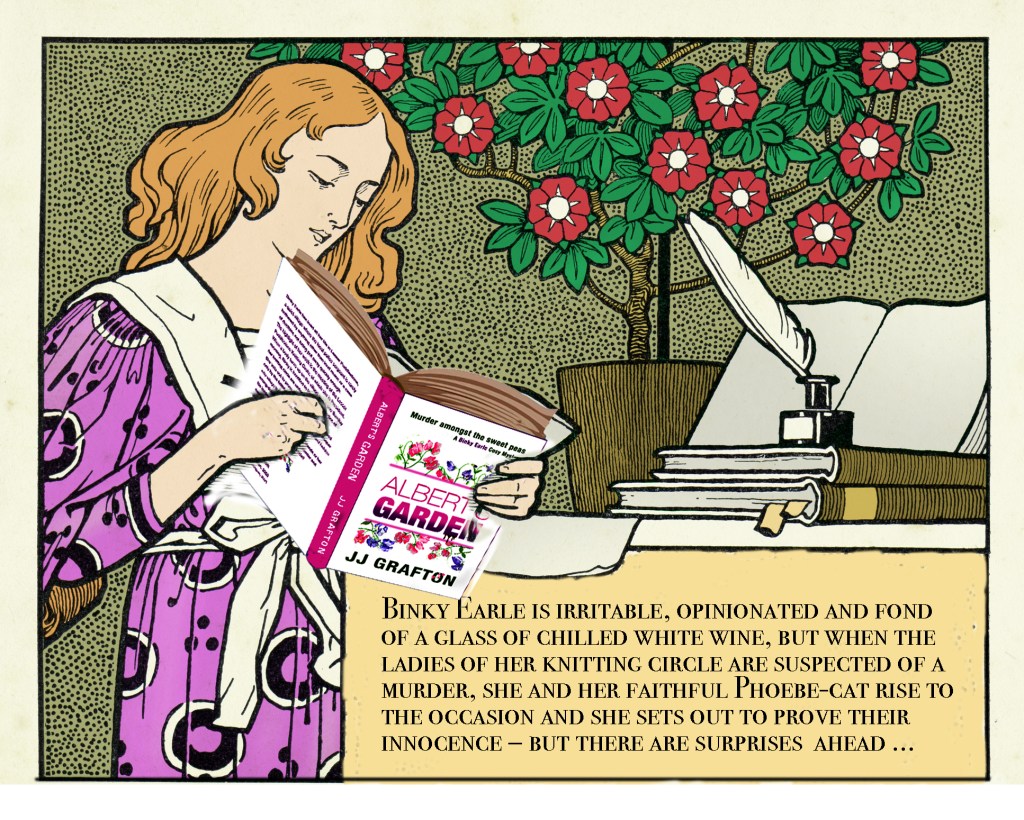
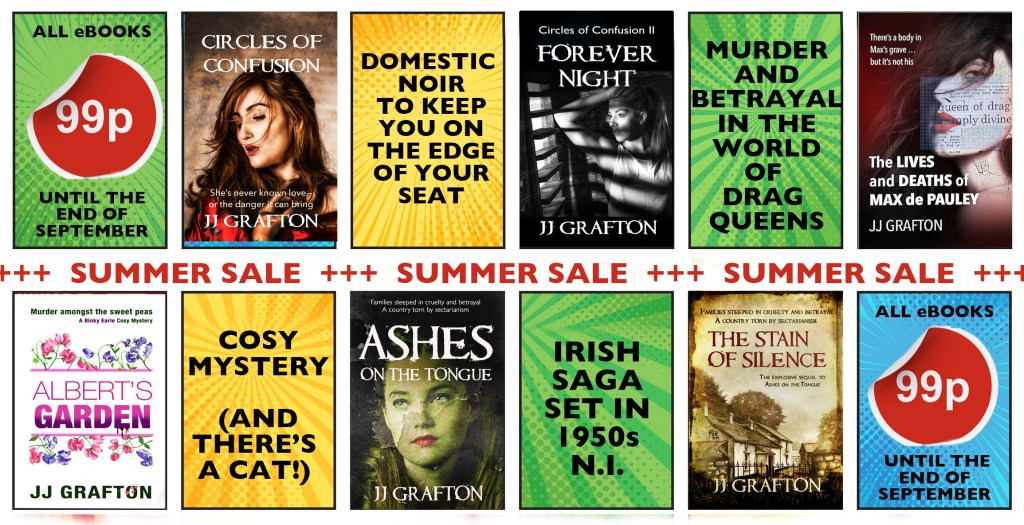
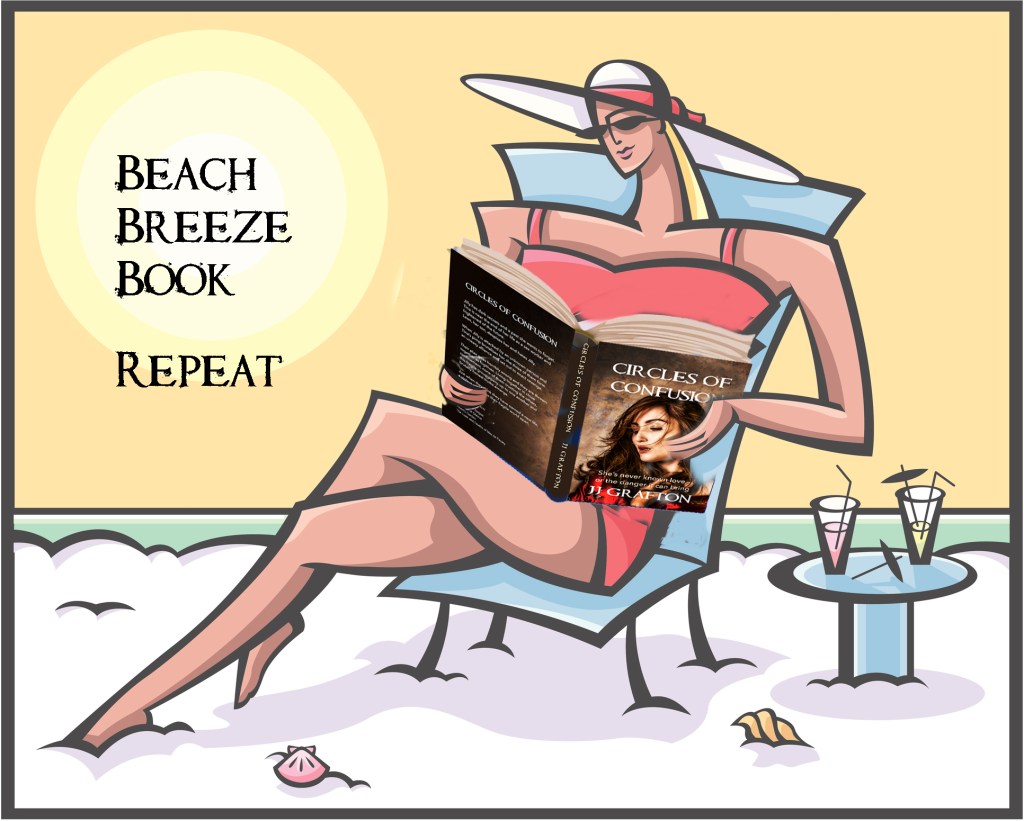
Today, I’ve been amusing myself by making advertisements for some of my books. I love messing about in Photoshop and, at one time, I would have been using my own photographs as backgrounds but macular degeneration put paid to that so, nowadays, I’ve made friends with Getty Images instead. Anyway, these are the results of today’s labours.
On the left, we have an attractive lady relaxing on the beach, reading Circles of Confusion, the first to feature Jilly, a photographer; Tina, a sex worker; and Tina’s pain-in-the-ass son, Leon. It’s a sordid little tale to be honest which explores themes of prostitution, domestic abuse and brutal revenge. Jilly, Tina and Leon pop up again in Forever Night: Circles of Confusion II and there’s a third book in the offing called Sylvie’s Story, which delves more deeply in Jilly’s past and her relationship with her mother.
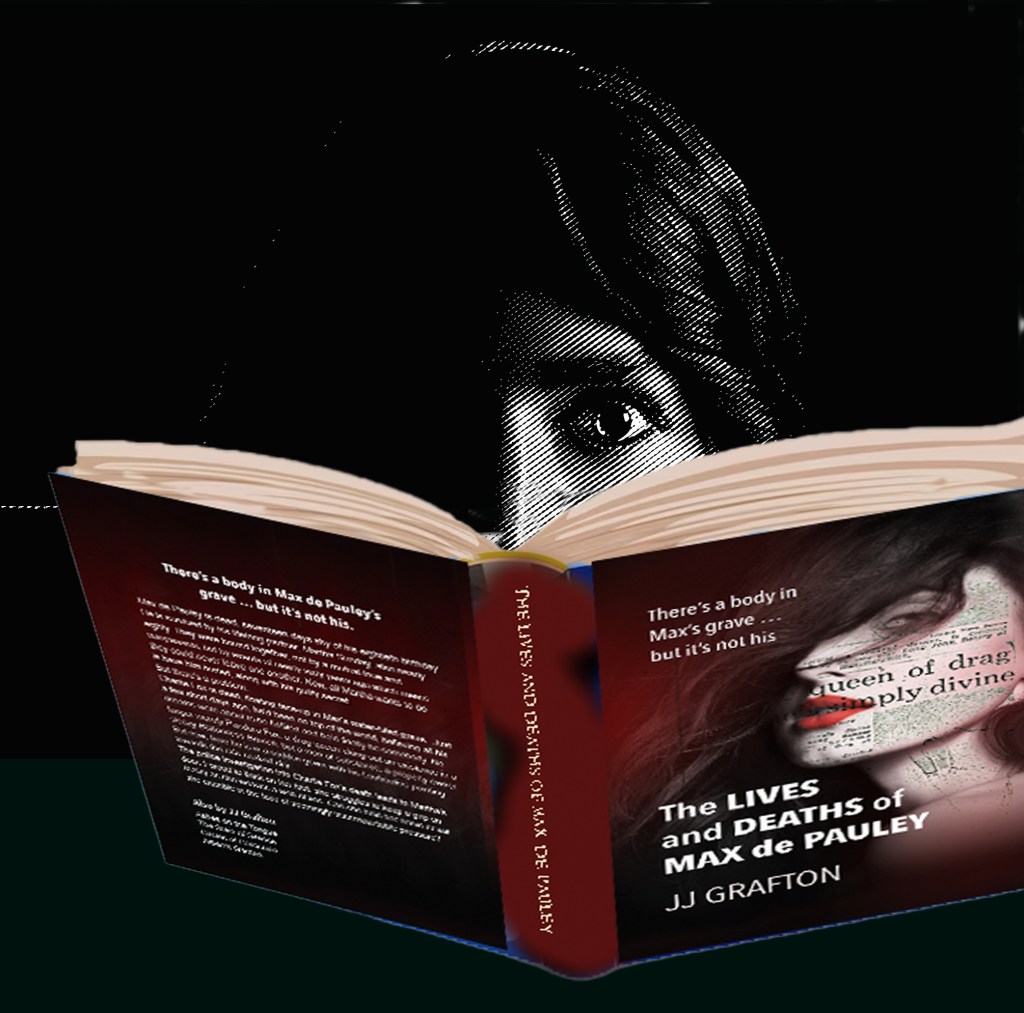
The Live and Deaths of Max de Pauley (centre picture) takes us into the world of drag queens and is written over two timelines, one of which stretches back to the 1950s. It begins and ends with a death and in between you’ll find a very twisted story involving, murder, betrayal and deception. It has a rich cast of characters, not many of them likeable and all with an axe of their own to grind. Maybe one day I’ll go back and re-visit this dark world. Or maybe they’re best left where they are.
Just to prove that not everything that comes from my grasshopper mind is doom and gloom, Albert’s Garden: A Binky Earle Cosy Mystery (pictured right) has a heroine who is a lady of a certain age, a little irritable and more than a little opinionated. Binky likes a glass of chilled white wine and loves her Siamese cat, Phoebe-cat. She lives in a sleepy village called Lesser Puddlestone and, when the ladies of her knitting circle are suspected of murder, Binky takes it as a personal affront. She and Phoebe-cat set out to exonerate them, not quite prepared for the well-hidden secrets they will uncover.
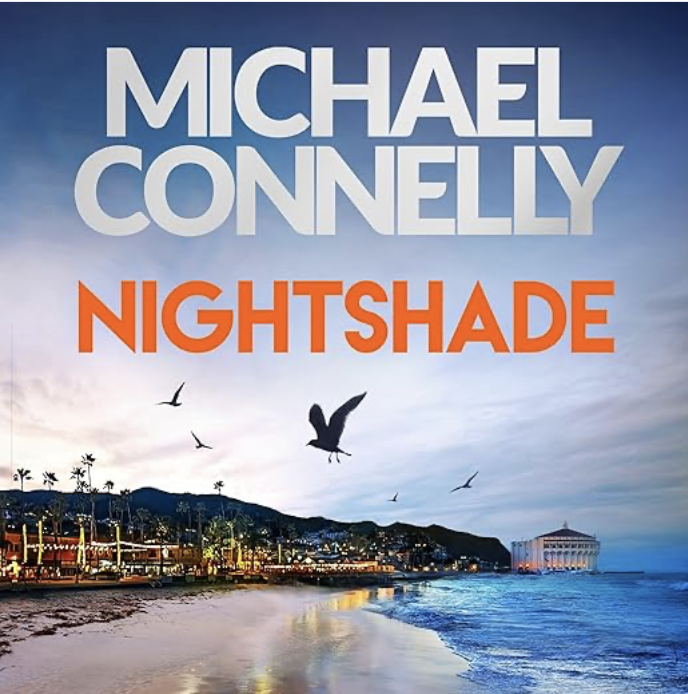
Nightshade: Michael Connelly

Location: A small town on Catalina island. Lots of descriptions of the area, name dropping of local landmarks and a mass of boating terms. It’s a first novel in a new series. I get it. But to fill the opening chapters with terminology that will be unfamiliar to most readers makes for a very slow start to the book.

Main character: Stillwell is a cop posted to the island as a form of punishment because he challenged the way in which  another detective, Aherne, handled a case. The details of this are given a fairly perfunctory explanation and didn’t add any illumination as to Stillwell’s character. Connelly goes them both nicknames – Stillborn and A-hole – and delights in using them ad nauseam. This interaction and a brief mention that Stillwell is divorced is the only backstory we get. The result is a fairly flat, uninteresting character who appears surly and suspicious most of the time. It was hard to like him, to be honest.
Love interest: Natasha (Tash) is the assistant harbour master who is useful for pushing the plot along. She also lacks any back story. She’s insecure, petulant and flounces off a lot. Why Stillwell is attracted to her is difficult to fathom. Maybe a case of like attracting like.
Plot: We have two murders – one the usual trope of a young woman murdered in mysterious circumstances. Stilwell solves this one through a series or fairly uninspiring interviews plus a bit of information from Tash; the other murderbis centred round local corruption (yawn) involving a beheaded buffalo and aliens. The murderer was pretty much signposted from the beginning. Overall, both strands lacked tension and the whole thing limped to a very low key conclusion. 
Conclusion: While not expecting a detective similar to Bosch, I had hoped for a well-rounded, if flawed, likeable protagonist, not what is essentially a cardboard cut-out. None of the secondary characters are strong enough to leave any lasting impression.With a few, isolated instances, Nightshade reads more like a cosy mystery than Connelly’s usual tense, edge-of-the-seat writing. I’m not sure how many homicides and violent crimes one small town can cope with before the population is completely wiped out. I won’t be waiting for the second in this series with bated breath, but I will listen to it in the hope that Connelly finds another gear.

The 4MK Trilogy: J D Barker

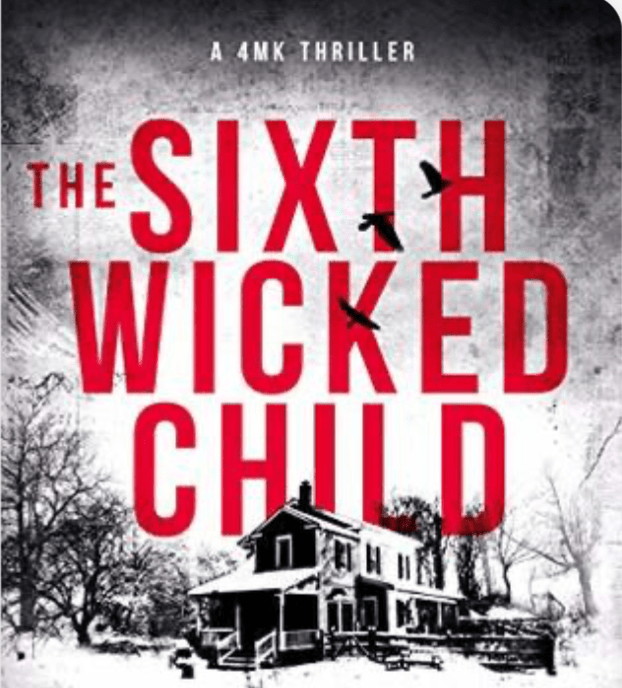
I waited until I had listened to all three of the 4MK Killer trilogy before writing a review. What started off in book one, The Four Monkey Killer, as a more-than-average serial killer story morphed into a surreal, fairly muddled storm of death and destruction in book two, The Fifth to Die, before settling into The Sixth Wicked Child, a bonkers, over-the-top explosion of the most unlikely plot I have ever read.

These books have been described, at various times, as the Sam Porter trilogy. They’re not. They’re the Anson Bishop trilogy. Anson, the deranged mastermind behind not one series of murders but several, dominates the books, especially the first and third. Whole sections are given over to his diaries, which reveal his past and lead us to believe we know what shaped this monster. But, do we? The diaries are part truth, part lies, as Sam Porter, ageing Bishop-obsessed detective, believes.
Over the three books, the bodies pile up in ever more bizarre circumstances and nearly every chapter has a twist, some of which pique the interest to drive the reader (listener) on in a quest to find out more. Others are apparently plucked out of mid-air as J D Barker’s fertile mind shoots off in another direction.
There are more than a few plotholes and loose ends that are never tied up as we gallop towards the conclusion. I enjoyed every single minute of this ridiculously over extravagant story with one exception. The ending. To paraphrase, we leave Anson and Sam with a muted whimper, not the expected bang.
Nevertheless, I am a committed J D Barker fan and will continue to listen my way through his books, even those I have read before. {As with the 4MK books). I just need a little rest in between. 

Fill your Kindle for summer!

To celebrate the onset of summer – and I’m convinced it’s going to be a fantastic one – I have reduced all my ebooks to 99 pence until the end of summer. As I have a grasshopper mind, there’s a selection of genres to choose from – or download them all and just go with the flow.
Circles of Confusion and Forever Night: Circles of Confusion II follow the fortunes of Jilly Graham, a young woman struggling to make her way in life against apparently insurmountable odds. When she meets Tina, a sex worker, and her dysfunctional family, Jilly makes choices which have disastrous consequences. But be warned, both books are quite dark and gritty.
If you fancy something a little lighter, then have a look at Albert’s Garden, a Binky Earle Cosy Mystery. Binky and her faithful Phoebe-cat set off to prove the innocence of the ladies of her knitting circle when it looks like one of them might be guilty of murder. Binky might be old and irritable but she’s nobody’s fool and, even though she uncovers unwelcome secrets in her village, she won’t stop until she gets to the bottom of the mystery.

For something entirely different, Ashes on the Tongue and The Stain of Silence are set in 1950s Northern Ireland and are centred round Fen Crozier, a young Protestant girl who discovers she has Roman Catholic relatives. As she discovers more about her family’s history, she is drawn into a violent struggle with not enough experience to deal with the horrific events that surround her.
Last, but not by any means least, The Lives and Deaths of Max de Pauley is a contemporary novel, set in the world of drag queens, spanning over fifty years as police investigate a body found in a water-filled grave. As they delve ever deeper into the case, a history of betrayal and murder, stretching over many decades, is revealed. None of the people interviewed are entirely honest and the ending, when it comes, will surprise you. Honest!

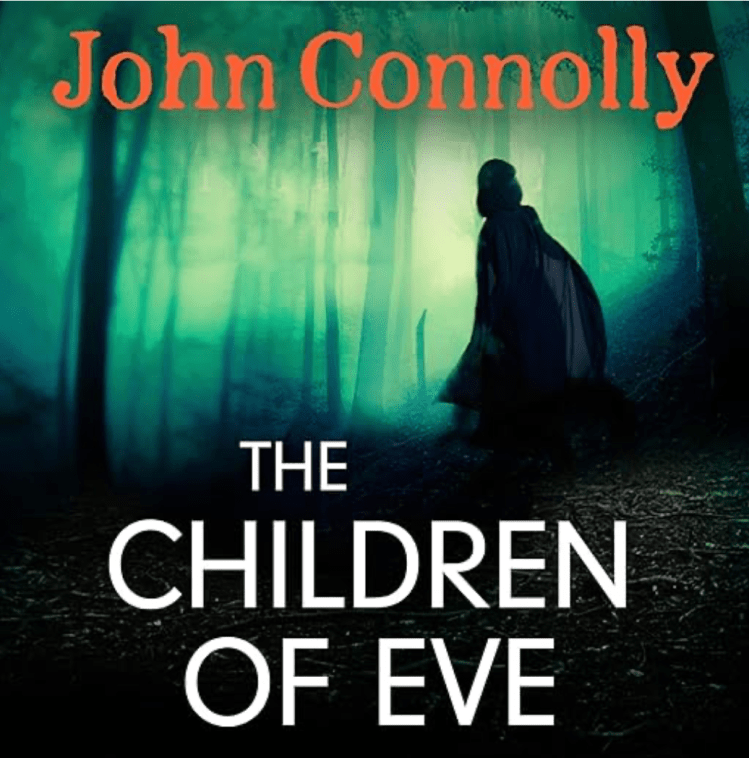
The Children of Eve: John Connolly

Charlie Parker is a bystander in this tale of kidnapped, mummified children and the hunt by some sort of deity to recover the, There are lots o bad characters on a sort of hierarchy where the most evil are killing off the lesser evil in grotesquely violent ways. Connolly devotes a fair bit of time in giving each of these characters a complicated and detailed background which consumes a large proportion of this book.

Charlie Parker is hired to find a missing boyfriend who turns out to be one of these malcreants and who gives Charlie Parker a beating, including breaking his nose. Parker hangs about on the periphery of this story, not contributing very much and things are resolved largely without his help.
Louis and Angel make cameo appearances, largely represented as drifting into middle age. The Fulci brothers appear in one scene, apparently with no other purpose than to supply a little light relief. Jennifer. Parker’s dead daughter, makes an appearance at the beginning and the end of the book to foretell some sort of future unnamed danger.
It would have been a more honest book if it had been presented as a horror story centred on the multitude of villains and criminals – it certainly wasn’t a Charlie Parker novel, not as we know him.
This is the twenty second of John Connolly’s books I have read and I don’t want to give up on him but I’m afraid the writing’s on the wall. I know I’ll buy the next one but I have a sneaking suspicion it may be the last.

A very evocative photograph

This photograph, by the hugely talented David Baker, took me back to a day, many years ago, when I stood on the beach at Inch, near Dublin. The landscape was composed entirely of sand, sea and sky. The only things disturbing the serenity of the scene were me with my camera and some jackeen who’d landed a helicopter on the sand.

Tom Lundy, the ‘Cut’ and toffee apples

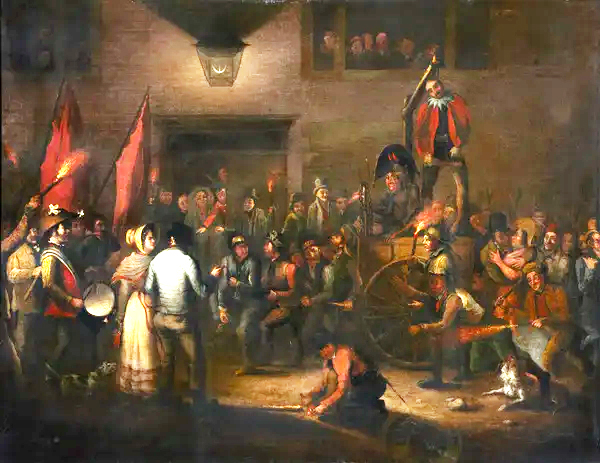
A lot of the background material in Ashes in the Tongue comes from my childhood in Banbridge in County Down. One of my early memories, which didn’t make it into the book, is of being wrapped up warmly on a winter’s night to witness the burning of Tom Lundy (Robert Lundy, died 1717).
In 1950s Northern Ireland, he was our ‘Guy Fawkes’, a traitor who had planned on opening the gates in Derry walls to give King James’ army access to the city. His plan was foiled by thirteen apprentice boys who closed the gates and thwarted the planned coup. It’s a fascinating piece of history, well worth a read.
The bonfire was lit on Devonshire Bridge, known to locals as Jinglers’ Bridge*, which spanned ‘The Cut’, a kind of forerunner of today’s underpass It was carved out of the town’s steep hill in the 1800s to accommodate the Belfast to Dublin Royal Mail because the horses struggled pulling the heavy carriages and passengers.
I looked forward to ‘Tom Lundy night’ for weeks, knowing I would be allowed to stay out after dark – and there were toffee apples! 

*So called because an old woman used to sell apples on it and jingle the money in her pocket so it became known as ‘Jingler’s Bridge’. 

Images: Burning the Effigy of Lundy in Derry, circa 1830. Mary Evans Picture Library. (At the moment, I haven’t managed to trace the name of the artist)
The Cut and Devonshire Bridge. No provenance available

A Pair of Kings

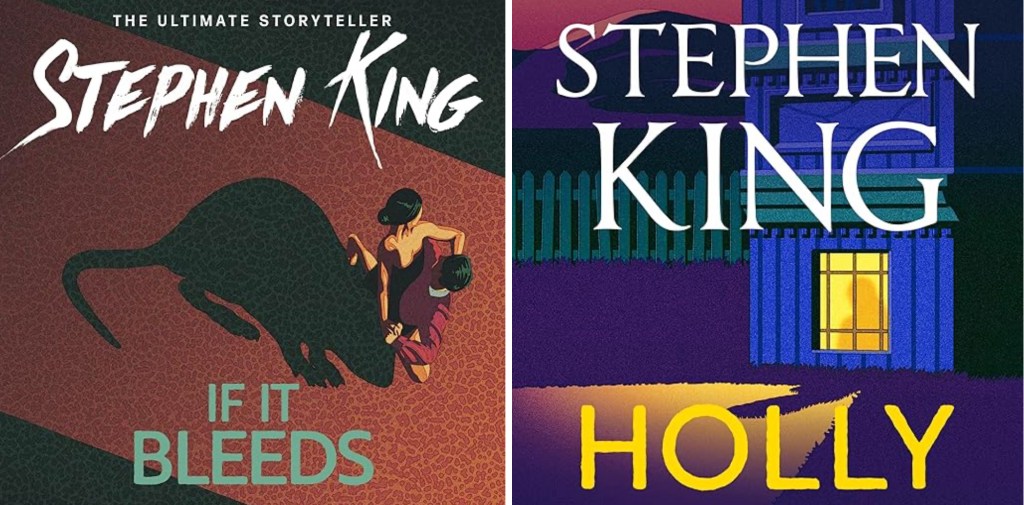
Holly by Stephen King. I had already read this book but was quite happy to listen to it again as (1) listening is quite a different experience to reading and (2) Holly Gibney is one of my favourite King characters. Jerome and Barbara are good back-ups for her but they’re just a little too perfect. I miss Bill Hodges and still think theMr Mercedes trilogy was some of King’s best work. A little too much of pushing his own politics in this one, but still highly enjoyable.

If It Bleeds by Stephen King. Four short stories, four different levels of enjoyment.
Mr Harrigan’s Phone – young boy, old man – a trope king has visited many times. An OK read but not memorable.
Chuck – gave up on Chuck and his unrelenting doom and gloom.
If It Bleeds – Holly again in a sequel to The Outsider. OK story, a bit rushed.
Rats – a Faustian tale that never really engaged my attention.

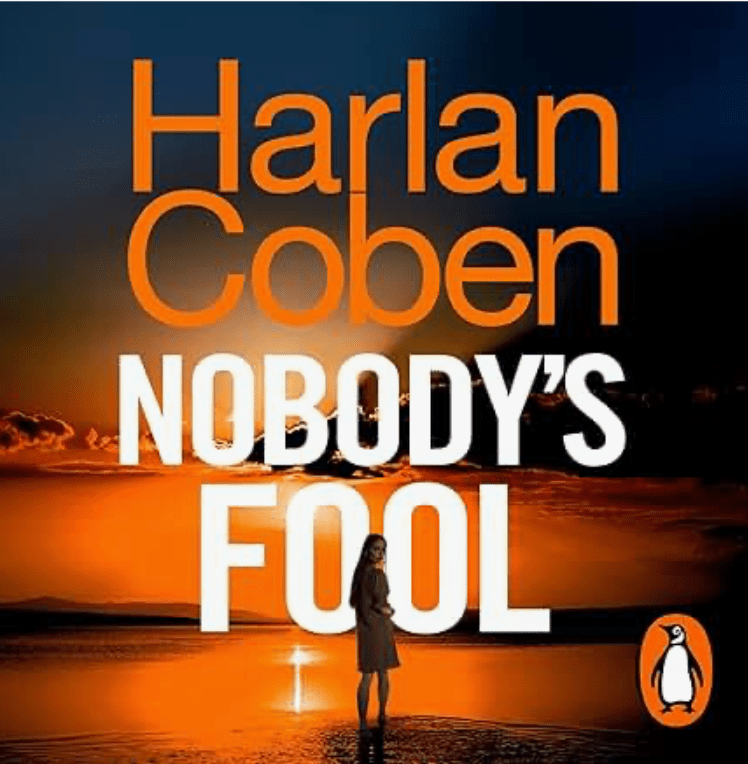
Nobody’s Fool: Harlan Coben

Twenty two years ago, Sami Pierce woke up to find his girlfriend, Anna, dead in the bed beside him, her body awash with blood. After he reported this to the police and returned to the scene, the body had disappeared. On his father’s advice, Sami left the country, returned yo America and got on with his life.
In the present day, Sami is an ex-police detective, earning a living by teaching wannabe detectives at night school.


One evening, Anna walks into the building in the middle of a lesson and Sami’s world is derailed. He sets off to prove that Anna is still alive and also to work out what happened in Spain all those years ago.
It’s a slow burner of a book. In the early chapters, much is written about his band of students who, somewhat incredibly, he enlists to help him investigate both strands of the puzzle. I felt that Coben didn’t quite know what to do with this bunch of people. On the one hand, there were lengthy inconsequential conversations between three airhead influencers, nearly a full chapter given over to the background story of a student whose marriage broke up because he cheated at golf. Yawn. There was another sub-group called the pink panthers but I never really understood who they were or what they contributed to the story. Also incredibly, these students popped up at regular  intervals during the story, armed with invaluable information just when the plot needed moving on.
There was a subplot involving the release from jail of the man who had murdered Sami’s fiancee some years ago. It didn’t contribute a lot other than providing a handy ‘man with a fun’ when Coben needed to polish off another character.
The book rolls along easily enough as long as you don’t scrutinise it too closely. I enjoyed Sami’s character development and the second half of the book sped up a bit when Coben concentrated more on the plot and eased up on the wisecracks and the random non sequiturs. The ending was satisfactory and had a neat little ‘you-what?’ moment. 
#2025AudiobookChallenge

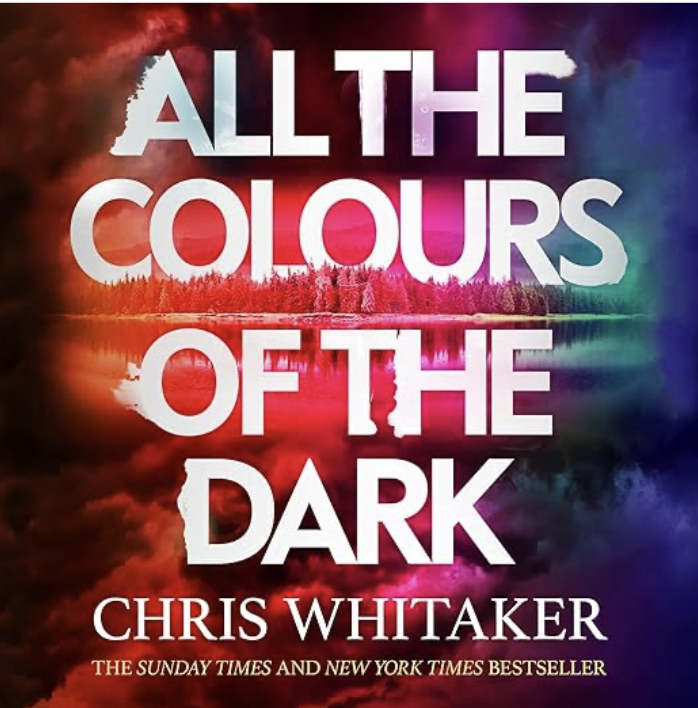
All the Colours of the Dark: Chris Whitaker

In All the Colours of the Dark by Chris Whitaker we have three central characters – Patch, a one-eyed boy who imagines himself as a pirate and who gets kidnapped in the early pages of the book; Saint, his only friend; Misty, the richest girl in town who is saved from abduction by Patch and falls in love with him; and Grace, about whom little can be said without spoilers.

There are also a wealth of extraneous characters – Patch’s alcoholic mother who is never more than a cliched cypher and deserved more from the author, Saint’s grandmother who also verges on alcoholism, the local police chief, the local doctor, and a drunken, chauvinistic art gallery owner.
During Patch’s time in captivity, he is held in complete darkness along with an unseen companion called Grace, who he falls in love with. He is rescued by Saint who, in turn, is in love with Patch. It takes quite a few chapters of this very long book to get to this point because Whitaker is nothing if not wordy. Quite a few of his characters are given to dishing out homespun wisdom and, at times, the pace of the story suffers because of this.
Moving on. As an adult, after his return to freedom, Patch devotes his life to finding Grace, who disappeared on the night of his rescue. Initially, he does this by roaming America, searching for information about missing girls, any of whom could be Grace. He funds these excursions by robbing banks, donating most of the money to organisations that search for missing girls and keeping only enough to live on. This section of the book is interminable, as the author describes Patch’s meetings with parent after parent, empathising with them. Did I mention he was also a talented artist, who gifted the parents portraits of their missing daughters?
In the meantime, Saint has become a police officer and also devotes all her spare time in trying to find Grace. She eventually is the one who arrests Patch and he goes to prison. Saint becomes an FBI officer, purely to expedite her search for Grace, marries a man she doesn’t love and wrecks her own marriage.
At this point, we are about one third of the way through the book and there is a mind-boggling plot to chomp through before the conclusion of the story.
I started off loving this book, not minding the excessive verbiage, as Whitaker laid down the characters. Initially, they all tug at the heartstrings, portrayed as flawed but fundamentally decent folk who have been caught up in a drama not of their making. The interim section was so-so, largely given over to Patch’s windmill tilting, but it was the second half of the book that nearly drove me to deleting it in frustration. The characters became caricatures and very unrealistic ones, at that. I couldn’t find the foul-mouthed, womanising art dealer either funny or endearing, as I guess I was supposed to. Neither was I entranced by a pre-teenager who was also foul-mouthed and rude to everyone. I stuck with it – audiobooks aren’t cheap – and prayed that, by some miracle, at least one of these selfish, self-obsessed people would take a breath and just consider the consequences of their actions. The end, when it finally limped into view, was better than any of them deserved.
What began as a full blown five star read stumbled its way to an ending that barely merited two stars.  
#2025AudiobookChallenge