Tom Lundy, the ‘Cut’ and toffee apples

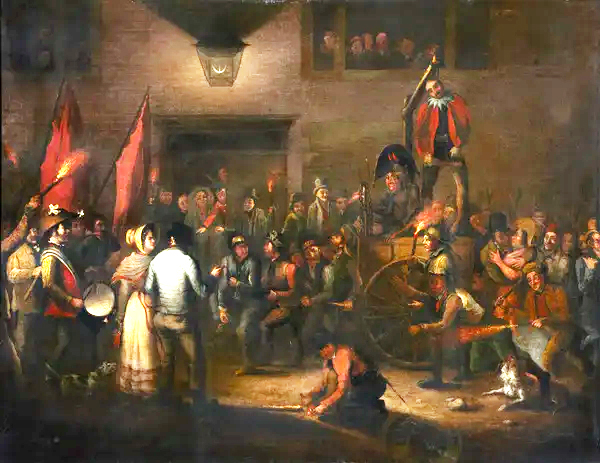
A lot of the background material in Ashes in the Tongue comes from my childhood in Banbridge in County Down. One of my early memories, which didn’t make it into the book, is of being wrapped up warmly on a winter’s night to witness the burning of Tom Lundy (Robert Lundy, died 1717).
In 1950s Northern Ireland, he was our ‘Guy Fawkes’, a traitor who had planned on opening the gates in Derry walls to give King James’ army access to the city. His plan was foiled by thirteen apprentice boys who closed the gates and thwarted the planned coup. It’s a fascinating piece of history, well worth a read.
The bonfire was lit on Devonshire Bridge, known to locals as Jinglers’ Bridge*, which spanned ‘The Cut’, a kind of forerunner of today’s underpass It was carved out of the town’s steep hill in the 1800s to accommodate the Belfast to Dublin Royal Mail because the horses struggled pulling the heavy carriages and passengers.
I looked forward to ‘Tom Lundy night’ for weeks, knowing I would be allowed to stay out after dark – and there were toffee apples! 

*So called because an old woman used to sell apples on it and jingle the money in her pocket so it became known as ‘Jingler’s Bridge’. 

Images: Burning the Effigy of Lundy in Derry, circa 1830. Mary Evans Picture Library. (At the moment, I haven’t managed to trace the name of the artist)
The Cut and Devonshire Bridge. No provenance available

A Pair of Kings

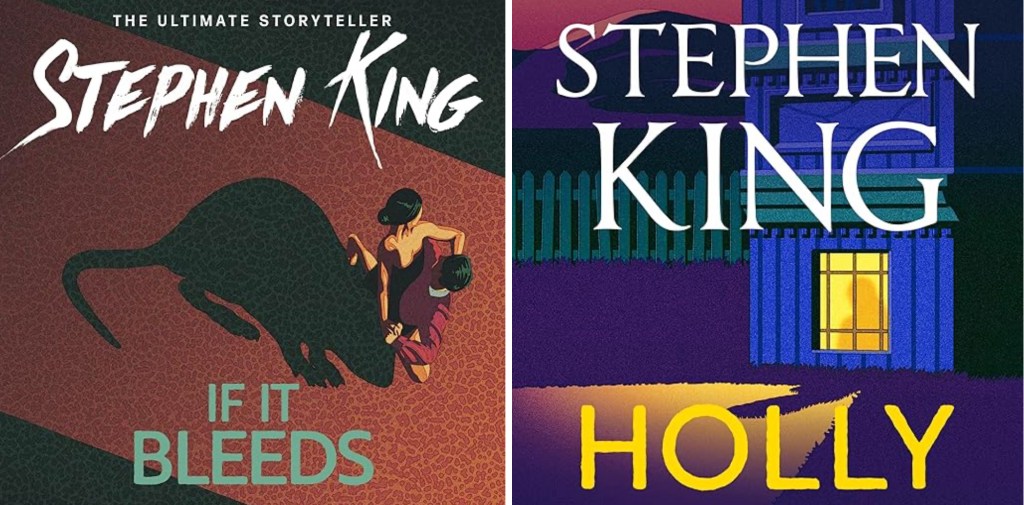
Holly by Stephen King. I had already read this book but was quite happy to listen to it again as (1) listening is quite a different experience to reading and (2) Holly Gibney is one of my favourite King characters. Jerome and Barbara are good back-ups for her but they’re just a little too perfect. I miss Bill Hodges and still think theMr Mercedes trilogy was some of King’s best work. A little too much of pushing his own politics in this one, but still highly enjoyable.

If It Bleeds by Stephen King. Four short stories, four different levels of enjoyment.
Mr Harrigan’s Phone – young boy, old man – a trope king has visited many times. An OK read but not memorable.
Chuck – gave up on Chuck and his unrelenting doom and gloom.
If It Bleeds – Holly again in a sequel to The Outsider. OK story, a bit rushed.
Rats – a Faustian tale that never really engaged my attention.

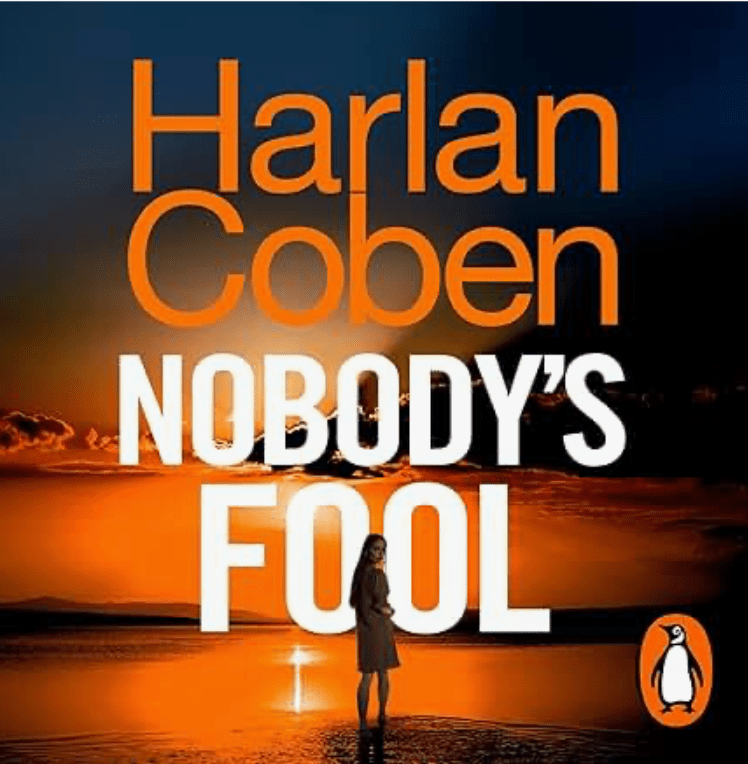
Nobody’s Fool: Harlan Coben

Twenty two years ago, Sami Pierce woke up to find his girlfriend, Anna, dead in the bed beside him, her body awash with blood. After he reported this to the police and returned to the scene, the body had disappeared. On his father’s advice, Sami left the country, returned yo America and got on with his life.
In the present day, Sami is an ex-police detective, earning a living by teaching wannabe detectives at night school.


One evening, Anna walks into the building in the middle of a lesson and Sami’s world is derailed. He sets off to prove that Anna is still alive and also to work out what happened in Spain all those years ago.
It’s a slow burner of a book. In the early chapters, much is written about his band of students who, somewhat incredibly, he enlists to help him investigate both strands of the puzzle. I felt that Coben didn’t quite know what to do with this bunch of people. On the one hand, there were lengthy inconsequential conversations between three airhead influencers, nearly a full chapter given over to the background story of a student whose marriage broke up because he cheated at golf. Yawn. There was another sub-group called the pink panthers but I never really understood who they were or what they contributed to the story. Also incredibly, these students popped up at regular  intervals during the story, armed with invaluable information just when the plot needed moving on.
There was a subplot involving the release from jail of the man who had murdered Sami’s fiancee some years ago. It didn’t contribute a lot other than providing a handy ‘man with a fun’ when Coben needed to polish off another character.
The book rolls along easily enough as long as you don’t scrutinise it too closely. I enjoyed Sami’s character development and the second half of the book sped up a bit when Coben concentrated more on the plot and eased up on the wisecracks and the random non sequiturs. The ending was satisfactory and had a neat little ‘you-what?’ moment. 
#2025AudiobookChallenge

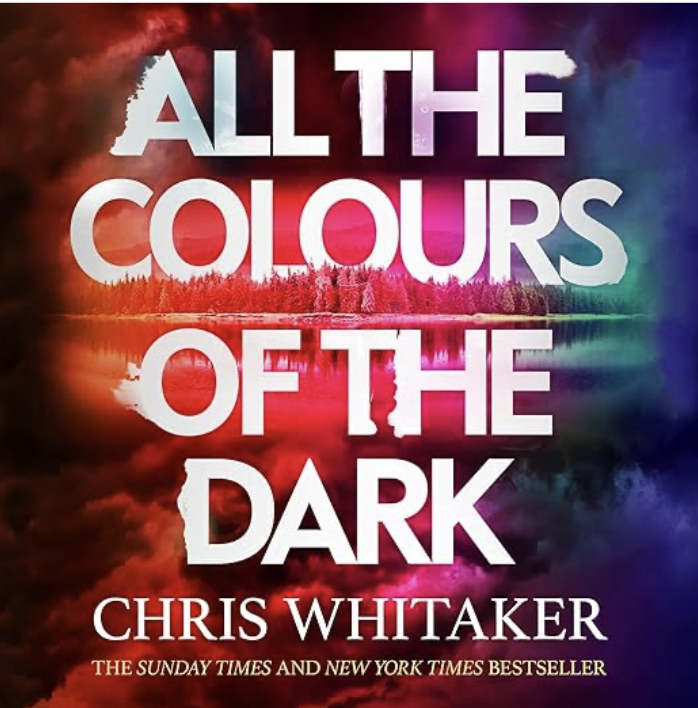
All the Colours of the Dark: Chris Whitaker

In All the Colours of the Dark by Chris Whitaker we have three central characters – Patch, a one-eyed boy who imagines himself as a pirate and who gets kidnapped in the early pages of the book; Saint, his only friend; Misty, the richest girl in town who is saved from abduction by Patch and falls in love with him; and Grace, about whom little can be said without spoilers.

There are also a wealth of extraneous characters – Patch’s alcoholic mother who is never more than a cliched cypher and deserved more from the author, Saint’s grandmother who also verges on alcoholism, the local police chief, the local doctor, and a drunken, chauvinistic art gallery owner.
During Patch’s time in captivity, he is held in complete darkness along with an unseen companion called Grace, who he falls in love with. He is rescued by Saint who, in turn, is in love with Patch. It takes quite a few chapters of this very long book to get to this point because Whitaker is nothing if not wordy. Quite a few of his characters are given to dishing out homespun wisdom and, at times, the pace of the story suffers because of this.
Moving on. As an adult, after his return to freedom, Patch devotes his life to finding Grace, who disappeared on the night of his rescue. Initially, he does this by roaming America, searching for information about missing girls, any of whom could be Grace. He funds these excursions by robbing banks, donating most of the money to organisations that search for missing girls and keeping only enough to live on. This section of the book is interminable, as the author describes Patch’s meetings with parent after parent, empathising with them. Did I mention he was also a talented artist, who gifted the parents portraits of their missing daughters?
In the meantime, Saint has become a police officer and also devotes all her spare time in trying to find Grace. She eventually is the one who arrests Patch and he goes to prison. Saint becomes an FBI officer, purely to expedite her search for Grace, marries a man she doesn’t love and wrecks her own marriage.
At this point, we are about one third of the way through the book and there is a mind-boggling plot to chomp through before the conclusion of the story.
I started off loving this book, not minding the excessive verbiage, as Whitaker laid down the characters. Initially, they all tug at the heartstrings, portrayed as flawed but fundamentally decent folk who have been caught up in a drama not of their making. The interim section was so-so, largely given over to Patch’s windmill tilting, but it was the second half of the book that nearly drove me to deleting it in frustration. The characters became caricatures and very unrealistic ones, at that. I couldn’t find the foul-mouthed, womanising art dealer either funny or endearing, as I guess I was supposed to. Neither was I entranced by a pre-teenager who was also foul-mouthed and rude to everyone. I stuck with it – audiobooks aren’t cheap – and prayed that, by some miracle, at least one of these selfish, self-obsessed people would take a breath and just consider the consequences of their actions. The end, when it finally limped into view, was better than any of them deserved.
What began as a full blown five star read stumbled its way to an ending that barely merited two stars.  
#2025AudiobookChallenge

Does familiarity breed complacency?

Michael Connolly has been one of my favourite authors ever since I read his first Harry Bosch novel in 1992. His Mickey Haller, the Lincoln Lawyer series didn’t disappoint either, confirming Connelly as a first class crime writer. I followed the fortunes of both characters down the years, adding the Renée Ballard stories to the mix as Bosch grew older in real time.
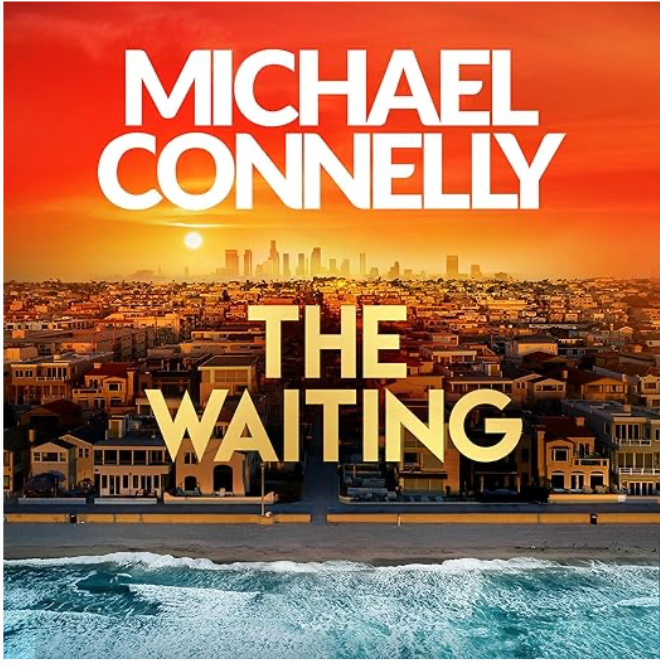
It was only when my eyesight deteriorated and I was constrained largely o audiobooks that I realised how much Connelly’s writing had changed over the tears. I recently finished listening to The Waiting (a Bosch and Ballard combo) which left me feeling vaguely dissatisfied. There were multiple strands running through the book which didn’t seem to have any relevance to one another, the lead protagonists made some very dubious decisions nd there were one or two instances of deus ex machina which made me stretch my eyes a little. I even saw a few reviews that suggested Connelly had not written the book. Hmm.
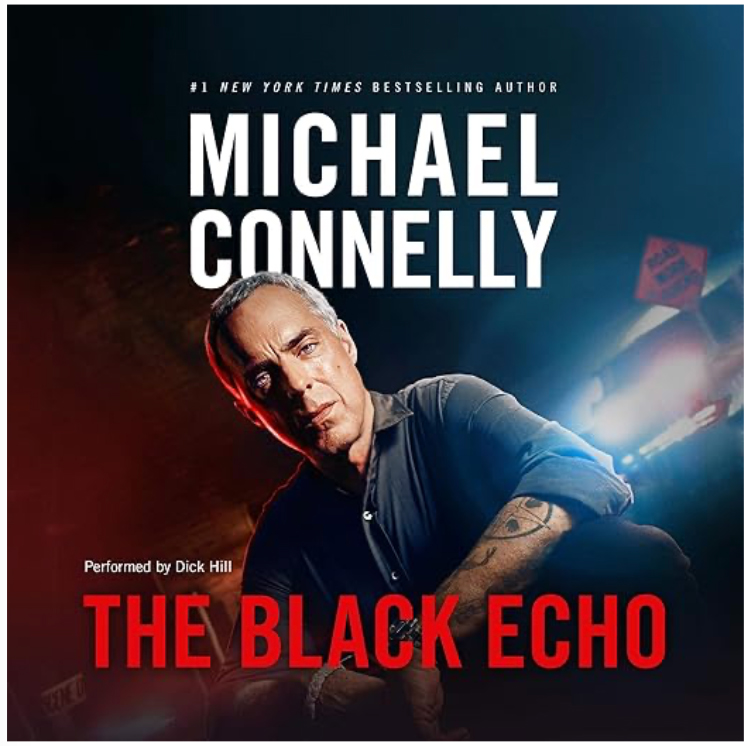
To satisfy my own misgivings, I downloaded The Black Echo, which is now over thirty years old. The difference in the two books was startling. In The Black Echo, Connelly explored Bosch’s time during the Vietnam war when he operated as a ‘tunnel rat’. a fully fleshed out series of episodes that served to build a complete understanding of why Bosch became the person he is when we first meet him. The Vietnam sections were cleverly tied in to bank robbers tunnelling underneath the streets of Hollywood to rob banks in the present day. There were multiple ties between the two timeline which were woven in so subtly that there was never a moment of, ‘Well, I saw that coming ‘. The end, when it came, was both a shock and expertly teased out. I was blown away by the reading experience.
When I finally took my earphones out, like all good books, the story stayed with me as I mulled over different scenarios, realising how perfectly Connelly had sown seeds along the way which made perfect sense in hindsight.
I don’t know at what point over the years Connelly’s writing changed, but there’s no denying that the raw energy and the intricate plotting of The Black Echo is a far cry the more formulaic, jumbled disappointment that is The Waiting. It left me wondering if, perhaps, there can be too much of a good thing, if an author spends so many years with a character that there just isn’t anything new to say about him or they just get tired of one another.
I will still read everything Conelly writes and, with a completely new character in a different setting making an appearance later this year, I’m pinning my hopes on finding a fresher, rejuvenated voice reminiscent of his earlier writing.

Forever Night

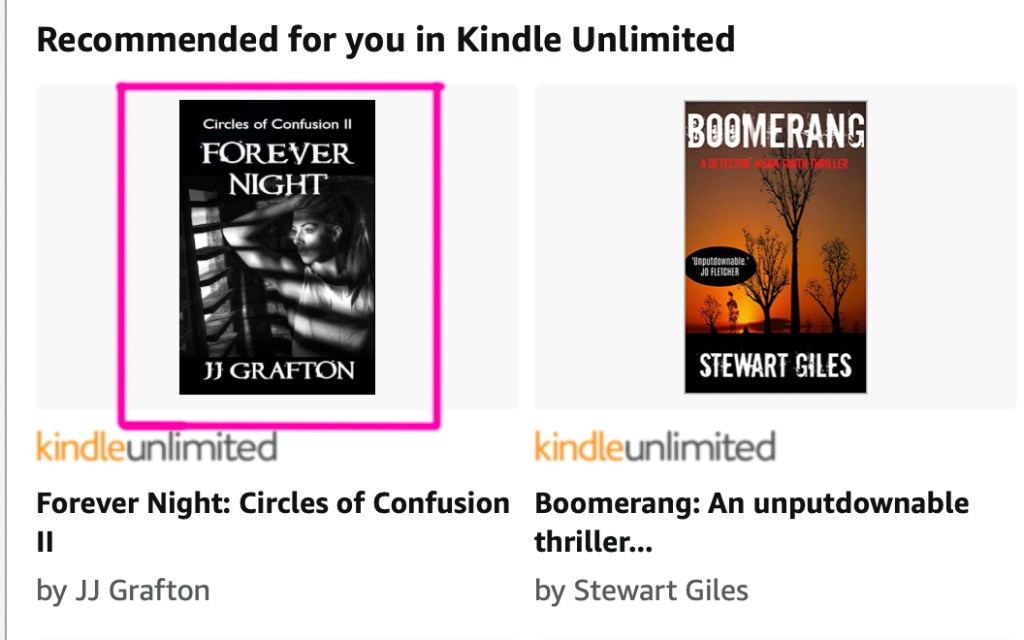
I got a nice surprise when I opened my emails this morning to find Forever Night: Circles of Confusion II featured on the KU Recommended List.

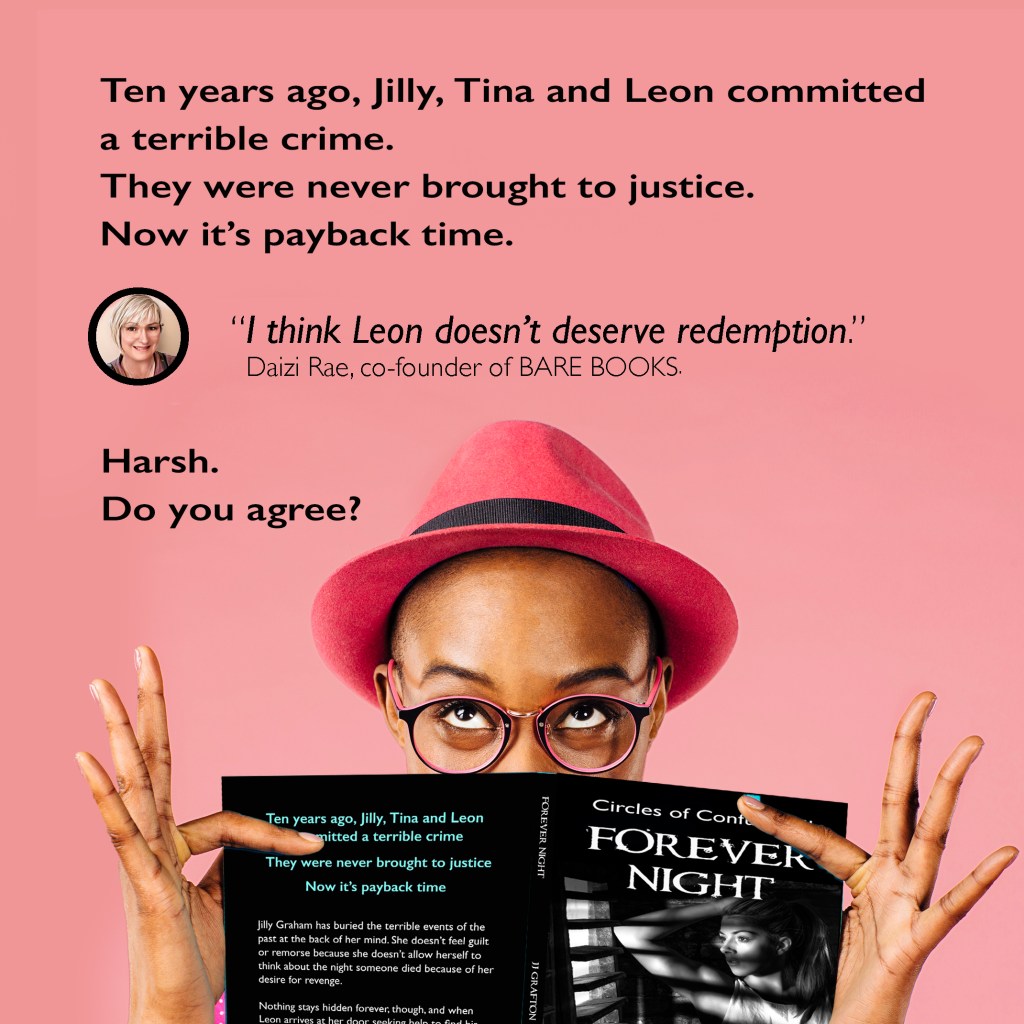
Ten years ago, Jilly, Tina and Leon committed a terrible crime.
They were never brought to justice.
Now it’s payback time.

Jilly Graham has buried the terrible events of the past at the back of her mind. She doesn’t feel guilt or remorse because she doesn’t allow herself to think about the night someone died because of her desire for revenge.

Nothing stays hidden forever, though, and when Leon arrives at her door, seeking help to find his mother, Tina, who has been missing for many years, she’s plunged back into a world of betrayal, lies and fear and forced to confront her own culpability in past events.

With old memories awakened and not knowing who she can trust, Jilly searches for Tina, hoping to reunite all three of them and lay past sins to rest. But nothing can prepare her for the explosive revelation that lies ahead and the danger it brings with it

The Impossible Thing: Belinda Bauer

The Impossible Thing is set in two different periods, approximately one hundred years apart. The stories are so different in every way that the two strands could each stand on their own as short stories. As it is, they’re tied together by the impossible thing – a scarlet guillemot’s egg, stolen from a bird on the Yorkshire cliffs in 1926 and the subject of robbery in the present.
Early in the twentieth century, a number of men made their living by lowering themselves over the cliff edge on ropes and stealing eggs from the se birds. This section of the book entranced me. The location is situated between Brampton Cliffs and Flamborough, an area I visited for many years, photographing puffins, gannets, guillemots and kittiwakes, among others. Bauer’s descriptions of the area took me back there, to the sounds and smells of the wheeling birds.
The story itself is quite simplistic. A young girl, Celie, steals the first red guillemot egg, setting in motion a chain of events involving an unscrupulous dealer, the repercussions of which echo down the years until we meet Patrick, a neurodivergent young man, and his friend, Weird Nick, who is – well, weird. The modern part of the story descends into a bit of a caper, as various people use any means possible to get their hands on the scarlet egg(s) – we meet egg collectors, the RSPB officers in pursuit of them and a scholarly chap who wants to complete his museum collection of the priceless eggs.
Some of Bauer’s recent books have disappointed me but she is back on form with his one. It’s sure-footed, well researched and has a satisfying ending.

Picture: Gannet at Bempton Cliffs © Jacqui Jay Grafton

Learning to love audiobooks

I’ve recently been forced to move from reading the printed/e-reader page to listening to audiobooks. Initially, it wasn’t what you’d call a roaring success. I quickly realised that most audiobooks stand or fall on the skills of the narrator and there were a lot of voices I just couldn’t cope with, even when sampling tried and tested authors. Ian Rankin is a case in point. The pantomime worthy Scottish accent of his narrator was like nails on a blackboard to me.
I learnt that I prefer to listen to a male voice rather than a female one. It’s a matter of dialogue – male narrators, in general, seem to be more able to handle female voices than vice versa. I also learnt to really listen to the samples provided before parting with my (usually) £7.99.
Stephen King has long been one of my favourite authors. I’ll even read his turkeys. (FairyTale, anyone?) So, I was pretty delighted to discover the voice of Will Patton as he narrated the Bill Hodges TrilogyMr. Mercedes, Finders Keepers and End of Watch. He was nominated for an Audie Award in the Solo Narration – Male category for his work on Mr. Mercedes. And richly deserved. He not only handles dialogue superbly but also infuses narrative with a range of emotions.
At present, I’ve just started the third in the trilogy and intend to search out more of Patton’s work in the future. And who knows, it might lead me to new authors and genres.

An Honourable Institution: Laura Lyndhurst

Laura Lyndhurst has taken a massive risk in creating a main character who is not only unlikeable but, frankly, abhorrent. Cressida is wealthy, arrogant, and has the morals of an alley cat. In the first chapters of the book, she doesn’t have a single redeeming feature as she uses her position to abuse and degrade those who are unfortunate enough to be drawn into her circle.
Cressida’s world implodes, however, when she is faced with a moral dilemma that will change her life forever, depending on the choices she makes. The path she chooses sets off a chain of events that affect everyone she comes in contact with, but also teaches her some of life’s toughest lessons.
The way in which Ms Lyndhurst teases out Cressida’s story left no doubt in my mind that the risk was well worth taking. Don’t expect a cosy bad-girl-turns-good-through-love scenario. That’s not what this story is about. Although Cressida does change (a lot), she doesn’t lose her essential character and, by the time the book came to its unexpected and startling conclusion, I was beginning to warm towards her.
An Honourable Institution is a rocky, uncomfortable ride that will stay in your mind long after you’ve devoured the last page. Read it. Today.

The Cold, Cold Ground: Adrian McKinty

Totally Immersive

I read this book some years ago and was instantly hooked on Adrian McKinty;s series set in Northern Ireland and featuring the maverick CID detective, Sean Duffy. As someone fairly new to audiobooks, I welcomed the chance to re-visit the books. A native of Carrickfergus himself, McKinty’s writing is rich with the atmosphere and idiosyncrasies of the province. The narrator, Gerard Doyle, threw me a little in the beginning because I had imagined Duffy’s accent to be harsher than portrayed here, but I soon settled in to this version and was very impressed with Doyle’s handling of the different characters’ voices.
The Cold, Cold Ground is a brutal story with many twists and turns and a wide array of interesting and multi-faceted characters. In other words, right up my street. It was a totally immersive experience and I can’t recommend it highly enough.