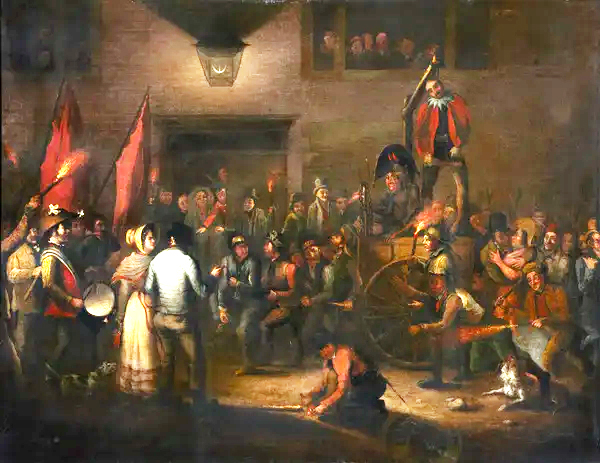
A lot of the background material in Ashes in the Tongue comes from my childhood in Banbridge in County Down. One of my early memories, which didn’t make it into the book, is of being wrapped up warmly on a winter’s night to witness the burning of Tom Lundy (Robert Lundy, died 1717).
In 1950s Northern Ireland, he was our ‘Guy Fawkes’, a traitor who had planned on opening the gates in Derry walls to give King James’ army access to the city. His plan was foiled by thirteen apprentice boys who closed the gates and thwarted the planned coup. It’s a fascinating piece of history, well worth a read.
The bonfire was lit on Devonshire Bridge, known to locals as Jinglers’ Bridge*, which spanned ‘The Cut’, a kind of forerunner of today’s underpass It was carved out of the town’s steep hill in the 1800s to accommodate the Belfast to Dublin Royal Mail because the horses struggled pulling the heavy carriages and passengers.
I looked forward to ‘Tom Lundy night’ for weeks, knowing I would be allowed to stay out after dark – and there were toffee apples!
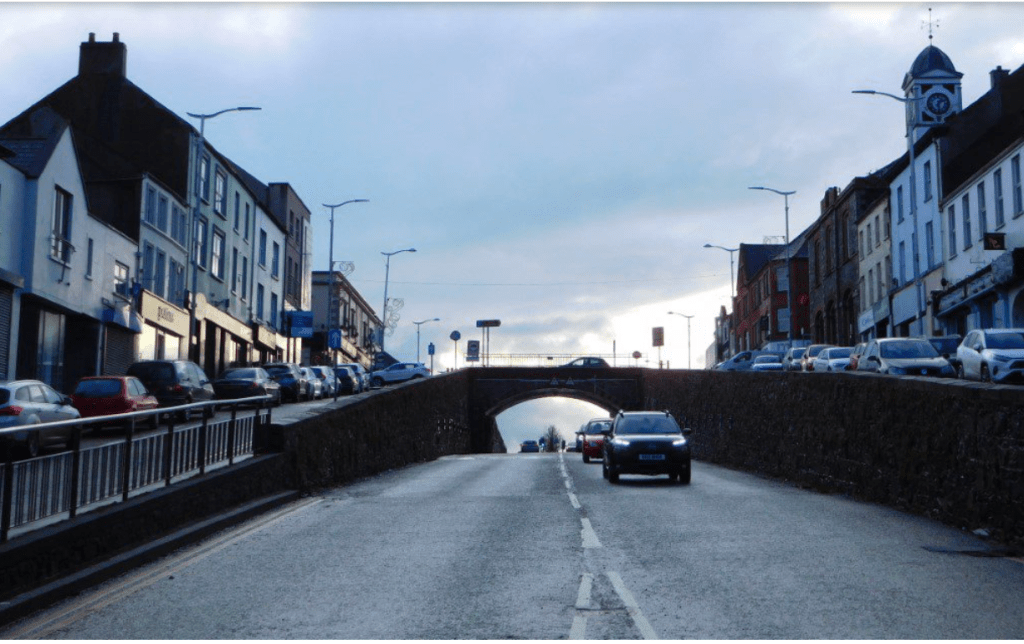
*So called because an old woman used to sell apples on it and jingle the money in her pocket so it became known as ‘Jingler’s Bridge’.
Images: Burning the Effigy of Lundy in Derry, circa 1830. Mary Evans Picture Library. (At the moment, I haven’t managed to trace the name of the artist)
The Cut and Devonshire Bridge. No provenance available
 Jacqui Jay